
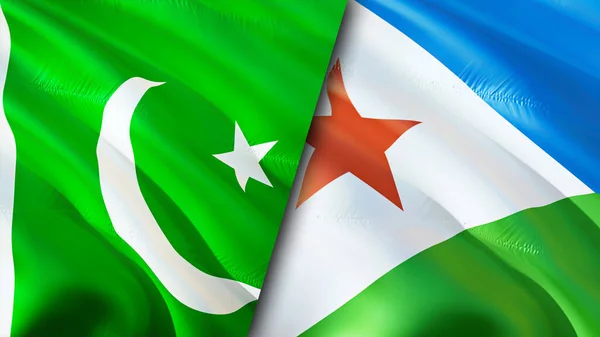
Amidst evolving global dynamics, Djibouti and Pakistan are forging robust geo-economic ties through recent MoUs and trade corridors, unlocking mutual potentials in logistics, investment, and regional connectivity for shared prosperity and strategic growth.
Key Points
- Diplomatic Advancements: The January 2025 MoU on Bilateral Political Consultations strengthens political, economic, and security cooperation, with plans for a Joint Business Council.
- Trade Growth: Bilateral trade reached approximately $101 million in 2023, with Pakistan’s exports dominating, showing an 11.8% annualized increase since 2018.
- Maritime Initiatives: A new trade corridor linking Karachi to Djibouti, announced in April 2025, aims to enhance exports to East Africa.
- Sectoral Potentials: Opportunities in ports, agriculture, textiles, pharmaceuticals, and digital infrastructure could drive job creation and GDP boosts.
- Economic Projections: Djibouti’s GDP grew over 6.5% in 2024; Pakistan’s is projected at 3.2-3.5% for 2026, with synergies amplifying mutual resilience.
- Strategic Benefits: Djibouti’s hub status complements Pakistan’s Gwadar Port, fostering access to COMESA markets and BRI integrations.
Recent geo-economic developments between Djibouti and Pakistan highlight a promising trajectory for collaboration, appealing first to policymakers crafting strategic alliances in a multipolar world. The signing of the Memorandum of Understanding (MoU) on Bilateral Political Consultations in January 2025 marks a pivotal milestone. Signed by Additional Foreign Secretary Hamid Asghar Khan of Pakistan and Permanent Secretary General Mahmoud Ali Hassan of Djibouti, this agreement facilitates regular dialogues on political, economic, defense, and security matters. During the inaugural session, both sides expressed optimism about elevating ties, emphasizing trade and investment as cornerstones for a comprehensive partnership. This builds on Pakistan’s establishment of a resident mission in Djibouti in May 2022, underscoring a commitment to deeper engagement in the Horn of Africa.
For policymakers, this MoU opens avenues for policy harmonization, particularly in regional stability and countering shared threats like maritime security challenges. The next consultations are slated for 2026 in Islamabad, alongside a planned visit by Djibouti’s Foreign Minister and the formation of a Joint Business Council in the first half of 2025. President Asif Ali Zardari’s December 2025 statement labeling Djibouti a key partner in Pakistan’s Africa policy further reinforces this strategic pivot toward geoeconomics, as outlined in Pakistan’s National Security Policy 2022-2026.
Investors stand to gain from the burgeoning trade landscape. Bilateral trade has surged, with Pakistan’s exports to Djibouti climbing to $101 million in 2023 from $58 million in 2018, reflecting an impressive 11.8% annualized growth rate. Major exports include woven fabrics, cotton, rice, pharmaceuticals, and textiles, addressing Djibouti’s import needs while leveraging Pakistan’s manufacturing strengths. Imports from Djibouti remain negligible, at around $1,000 in 2024, indicating room for balanced expansion. The April 2025 announcement of a maritime trade corridor from Karachi to Djibouti, led by Pakistan’s Ministry of Maritime Affairs, promises to reduce transit times and costs, facilitating direct shipping lines and positioning Djibouti as a gateway to the East African Community (EAC) markets, encompassing over 500 million consumers with a $600 billion GDP.
To visualize this progress, consider the following table of bilateral trade trends:
|
Year |
Pakistan Exports to Djibouti (USD Million) |
Top Products |
Djibouti Exports to Pakistan (USD Thousand) |
Top Products |
Trade Balance (Favoring Pakistan, USD Million) |
|
2018 |
58 |
Textiles, Cotton |
~0 |
N/A |
58 |
|
2022 |
~50 |
Woven Fabrics, Rice |
~0 |
N/A |
~50 |
|
2023 |
101 |
Pharmaceuticals, Machinery |
~0 |
N/A |
101 |
|
2024 (Est.) |
115 (based on 11.8% growth) |
Agriculture Tech, Textiles |
1 |
Scrap Metal |
115 |
|
2025 (Est.) |
130 |
IT Services, Pharma |
5 (potential rise) |
Minerals |
125 |
Data from OEC, UN COMTRADE, and MOFA; estimates assume continued growth amid new initiatives.
This data underscores a favorable imbalance for Pakistan, yet the true value lies in reciprocal benefits. Djibouti’s strategic location as a logistics hub, with its ports handling transshipments to Ethiopia and beyond, aligns perfectly with Pakistan’s ambitions. The corridor’s second phase envisions Gwadar Port as a long-term export nexus, enhancing connectivity under the Belt and Road Initiative (BRI). For investors, this translates to opportunities in joint ventures, such as port infrastructure and free trade zones, where Pakistani expertise in textiles and agriculture can catalyze Djibouti’s industrial growth.
Academics will appreciate the analysis of these synergies. Djibouti’s economy demonstrated resilience with over 6.5% GDP growth in 2024, fueled by transshipment activities and infrastructure expansions, despite 25.9% unemployment. Projections for 2025 suggest sustained momentum through free zones and digital hubs, positioning Djibouti as a connector for Africa and beyond. Pakistan, with a projected GDP growth of 3.2% (IMF) to 3.5% (S&P) in 2026, can offer affordable pharmaceuticals and agricultural technologies to mitigate Djibouti’s vulnerabilities like high inflation (around 5%) and fiscal dependencies. In return, Djibouti’s access to COMESA markets provides Pakistan a foothold in Africa’s $3.4 trillion economy, diversifying supply chains and reducing reliance on traditional partners.
For the general public, these developments hold tangible upliftment. Enhanced cooperation in education, tourism, and health—such as Pakistani scholarships and pharmaceutical supplies—can improve livelihoods. Embassy activities in November 2025, including tours of Djibouti’s ports and industrial zones, highlight collaborative prospects in boosting economic growth and job creation. This promotional lens views the partnership as mutually beneficial: Pakistan gains African market entry, while Djibouti leverages Asian industrial prowess, fostering resilience against global uncertainties.
Conclusion
Djibouti and Pakistan are poised for a vibrant geo-economic alliance, propelled by the 2025 MoU, maritime corridor, and sectoral synergies. Policymakers must advance policy frameworks, investors capitalize on trade potentials, academics explore innovative models, and the public enjoy enhanced opportunities. This collaboration not only elevates bilateral trade and GDPs but also promotes regional stability, cultural exchanges, and sustainable development, heralding a future of interconnected prosperity.
* Dr. Muhammad Jahanzaib holds a PhD in International Relations, is a double gold medalist and author of the book The Interplay of Geo-Politics and Geo-Economics in Pakistan’s Foreign Policy (Post-2008) (Palgrave Macmillan), along with several esteemed publications. As Chief Visionary Officer of Diamanium Thinkers (a global think tank), he brings over 15 years of experience advising ministers, diplomats, security agencies, the corporate sector, and civil society. His advisory work spans economic diplomacy, political economy, economic intelligence, security, society, strategic financial advisory, and the geo-economic world dynamics. He offers a unique blend of practitioner insight and academic rigor, combining hands-on engagement with state institutions and strategic expertise grounded in research. He can be reached at jahanzaibdgc@gmail.com.
Key References
- “Pakistan and Djibouti Signed MoU on Bilateral Political Consultations and Held the Inaugral Session.” – https://mofa.gov.pk/press-releases/pakistan-and-djibouti-sign-mou-on-bilateral-political-consultations-and-hold-inaugural-session
- “Pakistan (PAK) and Djibouti (DJI) Trade | The Observatory of Economic Complexity” – https://oec.world/en/profile/bilateral-country/pak/partner/dji
- “Pakistan to establish maritime trade corridor linking Karachi to Djibouti” – https://gwadarpro.pk/1913937582850174977/pakistan-to-establish-maritime-trade-corridor-linking-karachi-to-djibouti
- “Pakistan, Djibouti sign MoU to enhance political, economic ties” – https://www.pakistantoday.com.pk/2025/01/15/pakistan-djibouti-sign-mou-to-enhance-political-economic-ties
- “Djibouti: 2025 Article IV Consultation-Press Release; and Staff Report” – https://www.elibrary.imf.org/view/journals/002/2025/276/article-A001-en.xml
- “2025 Investment Climate Statements: Djibouti” – https://www.state.gov/reports/2025-investment-climate-statements/djibouti
- “President terms Djibouti as key partner in Pakistan’s Africa policy” – https://www.radio.gov.pk/09-12-2025/president-terms-djibouti-as-key-partner-in-pakistans-africa-policy
- “Pakistan GDP growth projection 2026 IMF or World Bank” – Various sources including IMF World Economic Outlook (October 2025)