
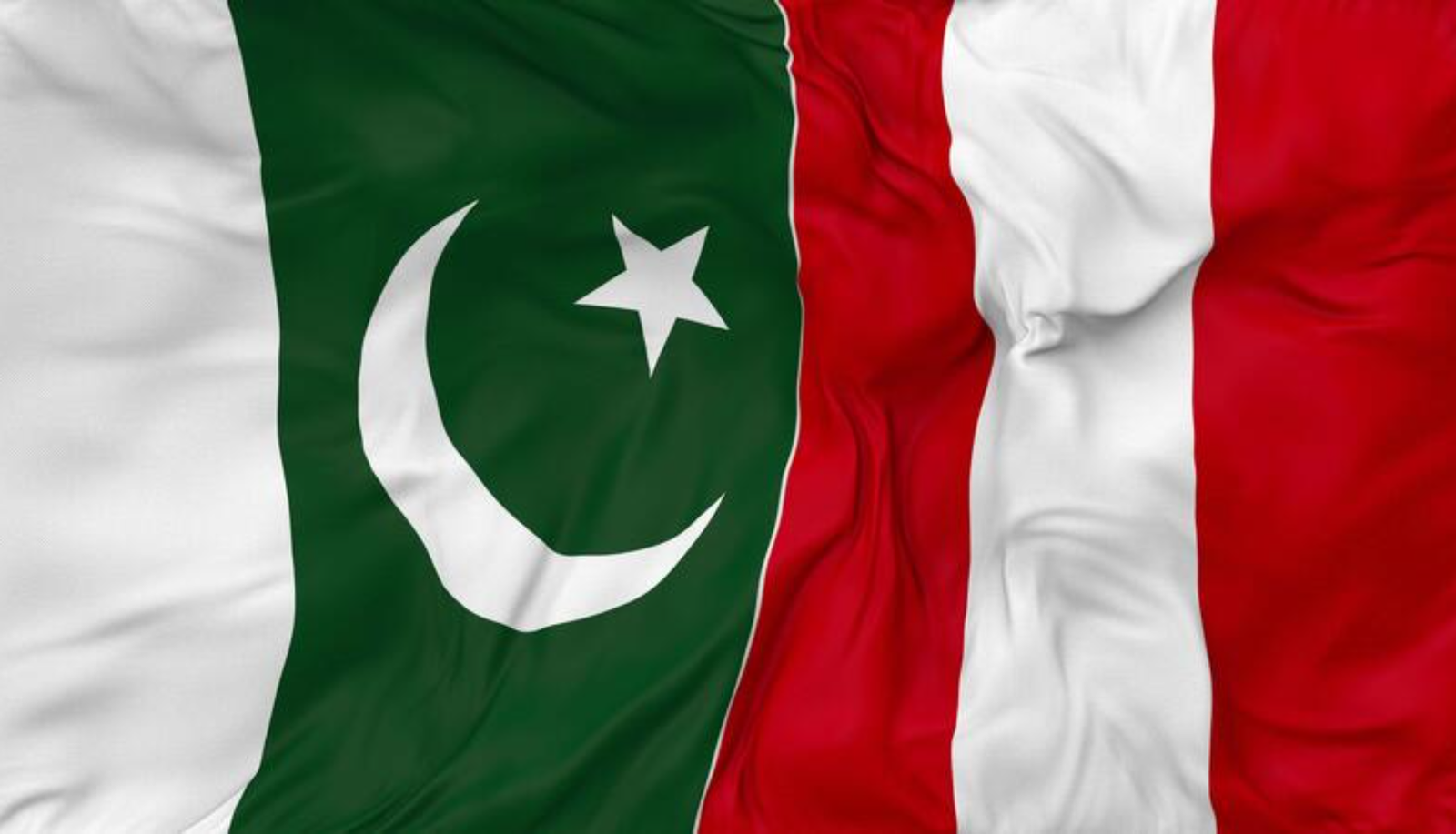
In a multipolar global landscape, Peru and Pakistan are poised to strengthen geo-economic linkages through trade diversification and sectoral alignments, harnessing potentials in mining, agriculture, and textiles for mutual resilience, growth, and prosperity amid shared challenges.
Key Points
- Diplomatic Foundations: Building on 70+ years of relations, recent Pakistani outreach to Latin America, including TDAP delegations in 2025, highlights untapped bilateral potential, with focus on market access and institutional ties.
- Trade Growth: Bilateral trade reached $43.03M in 2023, with Pakistan exporting $38.3M (textiles, apparel) to Peru and importing $4.73M (borates, zinc), showing annualized growth despite modest volumes.
- Investment Opportunities: Peru’s mining expertise complements Pakistan’s mineral resources; joint ventures in agro-tech and renewables could attract FDI, supported by MERCOSUR-Pakistan frameworks ratified in 2024.
- Sectoral Potentials: Synergies in copper processing, cotton trade, and sustainable energy promise job creation and diversification, leveraging Peru’s commodity strengths with Pakistan’s manufacturing base.
- Economic Stability: Peru’s projected 3.3% GDP growth in 2025 and Pakistan’s 3.0% in FY26 provide resilient platforms, mitigating climate risks through collaborative initiatives.
As global trade shifts toward South-South alliances, the geo-economic partnership between Peru and Pakistan represents a strategic opportunity for balanced development. Policymakers can leverage frameworks like MERCOSUR-Pakistan trade agreements to enhance connectivity and policy alignment. Investors stand to gain from emerging sectors where Peru’s resource abundance meets Pakistan’s industrial capabilities, while academics can analyze models of cross-continental cooperation amid climate vulnerabilities. The general public benefits from economic spillovers, including jobs, affordable goods, and knowledge exchanges, promoting this tie as a pathway to inclusive prosperity.
Recent engagements underscore potential. Pakistan’s Trade Development Authority (TDAP) has emphasized Latin America as an untapped market, with 2025 delegations yielding export leads in textiles and leather, though specific Peru-focused outcomes remain nascent. This aligns with Peru’s push for diversified partnerships beyond traditional allies, as seen in its 2025 OECD economic surveys highlighting trade expansion needs. Bilateral relations, established in 1953, lack resident embassies but maintain concurrent accreditations—Pakistan from Buenos Aires, Peru from Islamabad—offering room for upgraded dialogues.
Economically, both nations show recovery. Peru’s GDP grew 3.3% in 2025, per BBVA Research, driven by mining exports and domestic demand, with projections at 3.1% for 2026 amid electoral uncertainties. Inflation ended 2025 at 1.5%, within targets, bolstered by strong copper prices and reserves. Pakistan’s economy expanded 3.0% in FY2025-26, according to the World Bank, supported by industrial rebound (4.77%) and services (2.91%), with FY2026-27 at 3.4%. Inflation moderated to 5-6%, with remittances and reforms enhancing stability, though floods pose risks.
Bilateral trade, while small, exhibits complementarity. In 2023, Peru exported $4.73M to Pakistan, down 3.34% annualized over five years, mainly borates ($1.15M), zinc ($855k), and vegetable saps ($809k), per OEC data. Pakistan exported $38.3M to Peru, down 2.6% annualized, led by heavy woven cotton ($4.95M), synthetic fabrics ($2.73M), and women’s suits ($2.72M). By 2024 estimates, volumes adjusted slightly, with Peru’s exports at $3.65M and Pakistan’s at $35.32M, reflecting global commodity fluctuations but steady demand. This imbalance favors Pakistan, yet Peru’s imports support its textile sector, while Pakistan benefits from Peruvian minerals for industry.
|
Bilateral Trade Overview (2023) |
Peru to Pakistan |
Pakistan to Peru |
|
Total Value (2023) |
$4.73M |
$38.3M |
|
Key Products |
Borates, Zinc, Vegetable Saps |
Cotton Fabrics, Synthetic Fabrics, Apparel |
Investments are underdeveloped but promising. Peru, a top copper producer, offers expertise for Pakistan’s Reko Diq project, potentially via joint ventures under frameworks like the 2024 MERCOSUR-Pakistan ratification. Pakistan’s cost-effective textiles could supply Peru’s apparel industry, while agro-tech collaborations address Peru’s food security and Pakistan’s import needs ($5B annually in edibles). Renewables synergies—Peru’s 20% green energy target by 2025 aligns with Pakistan’s solar push—could mitigate energy shortages and climate risks, with both nations vulnerable per global indices.
Potentials span key sectors. Mining cooperation could unlock Pakistan’s untapped minerals (copper, lithium), boosting Peru’s processing exports. Agriculture offers mutual gains: Peru’s soybeans complement Pakistan’s cotton, fostering value chains. BRICS aspirations (Pakistan applied 2026) could enhance access, with Peru as an observer. Analysis suggests navigating geopolitics—Peru’s US/China ties mirror Pakistan’s multi-alignment—for resilient supply chains against disruptions.
For academics, this invites study of geo-economic models: blending Peru’s economic complexity (0.85) with Pakistan’s labor force could counter vulnerabilities. The public gains from affordable Peruvian commodities and Pakistani goods, promoting cultural ties.
Challenges like distances and imbalances need logistics and agreements, but optimism prevails: enhanced commissions can drive growth, positioning both as Global South leaders.
|
Economic Indicators Comparison (2025-2026 Projections) |
Peru |
Pakistan |
|
GDP Growth (2025) |
3.3% |
3.0% |
|
GDP Growth (2026) |
3.1% |
3.4% |
|
Inflation (End-2025) |
1.5% |
5-6% |
|
Key Sectors for Cooperation |
Mining, Agriculture |
Textiles, Energy |
|
Trade Balance (Recent) |
Surplus |
Managed Surplus |
Conclusion
Peru and Pakistan’s geo-economic alliance, fueled by trade complementarities and sectoral potentials, promises sustained advancement in mining, agriculture, and renewables. Policymakers can utilize MERCOSUR frameworks for robust policies; investors explore ventures in minerals and textiles; academics investigate innovative models; and the public benefits from jobs, affordability, and exchanges. This partnership not only enhances bilateral resilience but also contributes to Global South stability amid uncertainties, fostering a prosperous future through committed collaboration.
* Dr. Muhammad Jahanzaib is the Founder & Chief Visionary Officer (CVO) of Diamanium Thinkers, a global think tank. He holds a PhD in International Relations, specializing in the intersection of geo-politics and geo-economics in Pakistan’s foreign and domestic policy. A double gold medalist and published scholar, he writes on economic intelligence, economic diplomacy, political economy, AI and regional cooperation in South Asia and beyond. He can be reached at jahanzaibdgc@gmail.com.
Key References
- “Peru (PER) and Pakistan (PAK) Trade” – https://oec.world/en/profile/bilateral-country/per/partner/pak
- “Pakistan (PAK) and Peru (PER) Trade” – https://oec.world/en/profile/bilateral-country/pak/partner/per
- “Peru Exports to Pakistan” – https://tradingeconomics.com/peru/exports/pakistan
- “Pakistan Imports from Peru” – https://tradingeconomics.com/pakistan/imports/peru
- “Peru Economic Outlook. December 2025” – https://www.bbvaresearch.com/en/publicaciones/peru-economic-outlook-december-2025
- “PAKISTAN: Sustained Reforms Needed for Inclusive Growth, Economic Stability and Flood Recovery” – https://www.worldbank.org/en/news/press-release/2025/10/27/-pakistan-sustained-reforms-needed-for-inclusive-growth-economic-stability-and-flood-recovery
- “Latin America: An Untapped Market for Pakistan” – https://www.issra.pk/insight/2025/Latin-America-An-Untapped-Market-for-Pakistan/insight.html
- “Peru and the IMF” – https://www.imf.org/en/countries/per
- “Pakistan and the IMF” – https://www.imf.org/en/countries/pak