
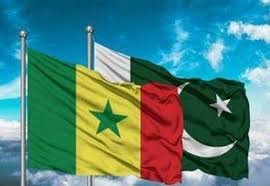
Senegal and Pakistan are forging robust geo-economic ties via 2025 trade forums, MoUs, and surging bilateral exchanges, unlocking potentials in agriculture, energy, textiles, and pharmaceuticals for equitable growth and regional stability.
Key Points
- For Policymakers: Capitalize on 2025’s 8 MoUs and Joint Business Council to refine trade policies, integrate with AfCFTA, and address imbalances through tariffs and infrastructure pacts, enhancing diplomatic leverage and economic security.
- For Investors: Tap into Senegal’s $23.5 billion 2025 FDI commitments and Pakistan’s SEZs with incentives, focusing on high-yield ventures in hydrocarbons and agro-processing for diversified returns amid stable growth forecasts.
- For Academics: Scrutinize trade surges from $77.86 million in 2023 to $186.33 million in 2024, exploring South-South dynamics, sustainability models, and policy impacts on GDP contributions through data-driven research.
- For the General Public: Benefit from affordable imports like Pakistani rice and textiles improving livelihoods, alongside job creation in joint sectors and cultural exchanges that strengthen community ties and economic empowerment.
Senegal and Pakistan, as resilient emerging economies, are strategically deepening their geo-economic partnership to harness synergies amid global shifts. Senegal’s GDP, projected at $32.8 billion in 2024 with 6.4% growth in 2025, is buoyed by hydrocarbon production and agricultural rebound, positioning it as a West African gateway. Pakistan’s $372 billion economy, with 3% growth in 2025 rising to 3.2% in 2026, excels in manufacturing and exports, offering complementary expertise. Recent milestones, including the 65th anniversary of relations in 2025 and the inaugural Pakistan-Senegal Trade and Investment Forum, blend up-to-date data with cooperative analysis, promoting beneficial outcomes for policymakers shaping frameworks, investors seeking returns, academics studying trends, and the public enjoying everyday gains.
A landmark was the 2025 Forum in Dakar, where 8 MoUs were signed between companies, focusing on rice, textiles, and agro-processing. This built on the Pakistan Rice Road Show, attracting 30 exporters for B2B meetings, and Pakistan’s participation as Country of Honor at FIKA and FIDAK fairs. These initiatives elevated trade, with Pakistan Embassy Senegal highlighting unprecedented economic engagements. By late 2025, dialogues emphasized energy and infrastructure, aligning with Senegal’s Invest in Senegal 2025 event securing $23.5 billion in commitments across 51 agreements.
Trade data underscores this momentum, showing robust growth but imbalances. In 2023, bilateral trade totaled $77.86 million, surging to $186.33 million in 2024 per UN COMTRADE. Pakistan’s exports jumped from $76.8 million to $172.44 million, while Senegal’s rose from $1.06 million to $13.89 million.
The table below details trade trends:
|
Year |
Total Bilateral Trade (US$ million) |
Pakistan Exports to Senegal (US$ million) |
Senegal Exports to Pakistan (US$ million) |
Trade Balance (Favoring Pakistan, US$ million) |
|
2021 |
24.2 |
23.2 |
1.0 |
22.2 |
|
2022 |
~30.0 (estimated) |
29.0 |
1.0 |
28.0 |
|
2023 |
77.86 |
76.8 |
1.06 |
75.74 |
|
2024 |
186.33 |
172.44 |
13.89 |
158.55 |
Key products reveal synergies: Pakistan supplies essentials like cereals (rice, $146.91 million in 2024), textiles ($12.92 million), and apparel, supporting Senegal’s food security and consumer markets. Senegal exports furniture ($9.55 million), railway equipment ($2.59 million), and vehicles, providing industrial inputs for Pakistan. This exchange addresses vulnerabilities—Pakistan gains from Senegal’s phosphates and emerging oil (production starting 2024)—while Senegal benefits from cost-effective goods amid its 2% inflation.
Rationally, this alliance promotes balanced development: Pakistan’s 11.7% annualized export growth to Senegal (2018-2023) can diversify. For instance, joint agro-processing could boost Senegal’s cashew and peanut exports by 20-25% using Pakistani tech, aligning with Senegal Vision 2050’s inclusive goals. In energy, Senegal’s Grand Tortue Ahmeyim gas project offers collaboration with Pakistan’s engineering, potentially attracting $150 million+ in FDI.
Untapped potentials span sectors, making this partnership a beacon for South-South cooperation. Agriculture promises hybrid initiatives in irrigation and seeds; textiles can integrate Senegal’s cotton with Pakistan’s $36 billion export base for AfCFTA hubs. Pharmaceuticals and infrastructure align with Senegal’s reforms and Pakistan’s SEZs, fostering R&D and connectivity.
The following table outlines cooperative sectors:
|
Sector |
Senegal’s Strengths |
Pakistan’s Strengths |
Cooperative Potentials |
Estimated Benefits |
|
Agriculture |
Phosphates, peanuts, fertile lands |
Rice, agro-tech |
Joint processing, hybrid seeds |
20-25% export rise, food security |
|
Textiles |
Cotton, labor force |
Manufacturing, $36B exports |
Apparel ventures, regional exports |
12,000+ jobs, supply chain diversification |
|
Pharmaceuticals |
Growing market, incentives |
Generics, surgical goods |
Local production, R&D |
$100M+ FDI, affordable healthcare |
|
Energy & Mining |
Oil/gas, minerals |
Engineering, refining |
Infrastructure, green energy projects |
Enhanced FDI, resource management |
|
Infrastructure |
Ports, AfCFTA hub |
Construction, cement |
SEZs, port upgrades |
Improved trade, regional connectivity |
For policymakers, these align with frameworks like the 2017 Joint Business Council, urging tariff reductions and climate-resilient pacts. Investors gain from Senegal’s $2 billion Saudi commitment and Pakistan’s incentives, as seen in 2025 forums. Academics can analyze how ties mitigate risks like floods (impacting Pakistan’s 2025 growth) through diversified chains. The public reaps affordable essentials, skills training, and cultural bonds, exemplified by embassy engagements. This geo-economic synergy, rooted in 2025’s milestones, champions sustainable, inclusive advancement, transforming potentials into shared prosperity.
Conclusion
Senegal and Pakistan’s geo-economic alliance, highlighted by 2025’s Trade Forum, Rice Road Show, and 8 MoUs, has propelled trade from $77.86 million in 2023 to $186.33 million in 2024, with potentials in agriculture, energy, and textiles. This collaboration drives innovation, jobs, and stability amid growth projections of 6.4% for Senegal and 3.2% for Pakistan in 2026. Policymakers should fortify agreements, investors leverage incentives, academics deepen insights, and the public embrace gains. By uniting West Africa and South Asia, both nations model resilient cooperation, fostering equitable development and a prosperous future.
* Dr. Muhammad Jahanzaib holds a PhD in International Relations, is a double gold medalist and author of the book The Interplay of Geo-Politics and Geo-Economics in Pakistan’s Foreign Policy (Post-2008) (Palgrave Macmillan), along with several esteemed publications. As Chief Visionary Officer of Diamanium Thinkers (a global think tank), he brings over 15 years of experience advising ministers, diplomats, security agencies, the corporate sector, and civil society. His advisory work spans economic diplomacy, political economy, economic intelligence, security, society, strategic financial advisory, and the geo-economic world dynamics. He offers a unique blend of practitioner insight and academic rigor, combining hands-on engagement with state institutions and strategic expertise grounded in research. He can be reached at jahanzaibdgc@gmail.com.
Key Citations
- As we begin 2026 with enthusiasm and vigor, let us also look back… – https://www.facebook.com/PakinSenegal/videos/as-we-begin-2026-with-enthusiasm-and-vigor-let-us-also-look-back-at-our-engageme/2405352396576701
- As we move forward with our recap 2025 series, let us have a look at – https://www.facebook.com/PakinSenegal/videos/as-we-move-forward-with-our-recap-2025-series-let-us-have-a-look-at-pakistan-emb/1578413033343962
- Pakistan (PAK) and Senegal (SEN) Trade | The Observatory of Economic Complexity – https://oec.world/en/profile/bilateral-country/pak/partner/sen
- Senegal (SEN) and Pakistan (PAK) Trade – https://oec.world/en/profile/bilateral-country/sen/partner/pak
- Pakistan Exports to Senegal – 2026 Data 2027 Forecast 2009-2024 Historical – https://tradingeconomics.com/pakistan/exports/senegal
- Senegal Exports to Pakistan – 2025 Data 2026 Forecast 1997-2024 Historical – https://tradingeconomics.com/senegal/exports/pakistan
- Senegal’s new strategic trajectory – African Climate Insights – https://africaclimateinsights.org/senegals-new-strategic-trajectory-3-critical-levers-to-attract-foreign-investment-and-accelerate-the-economic-and-social-recovery-plan
- Africa – Ministry of Foreign Affairs – https://mofa.gov.pk/africa
- Senegal GDP Annual Growth Rate – Trading Economics – https://tradingeconomics.com/senegal/gdp-growth-annual
- SENEGAL MPO – The World Bank – https://thedocs.worldbank.org/en/doc/bae48ff2fefc5a869546775b3f010735-0500062021/related/mpo-sen.pdf
- Pakistan and the IMF – https://www.imf.org/en/countries/pak
- PAKISTAN: Sustained Reforms Needed for Inclusive Growth, Economic Stability and Flood Recovery – World Bank – https://www.worldbank.org/en/news/press-release/2025/10/27/-pakistan-sustained-reforms-needed-for-inclusive-growth-economic-stability-and-flood-recovery