
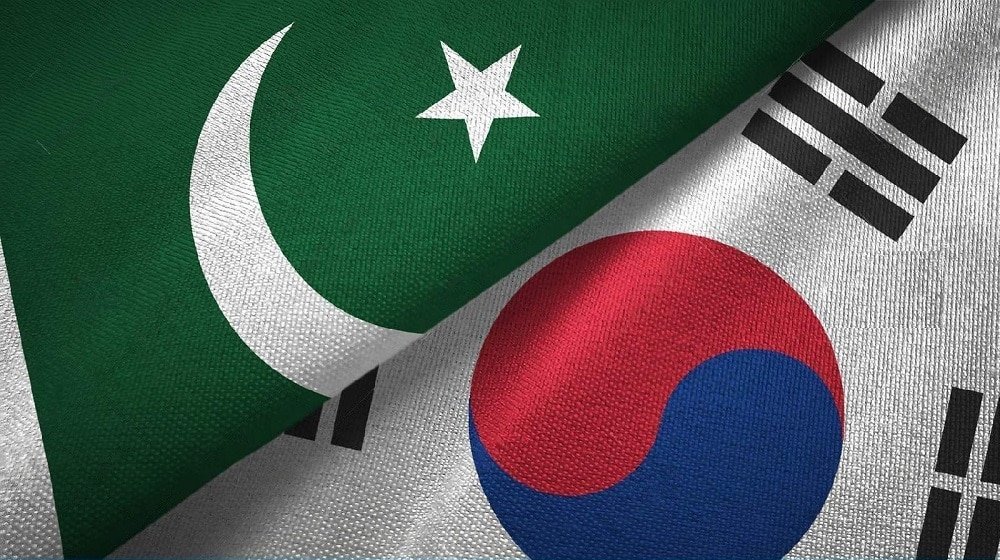
Amidst evolving Asian dynamics, South Korea and Pakistan are accelerating geo-economic ties via the 2025 Economic Partnership Agreement, unlocking trade surges, investment synergies, and collaborative potentials in tech, energy, and chemicals for shared prosperity and regional stability.
Key Points
- Policy Momentum: The January 2025 EPA signing marks a pivotal step, aiming to double bilateral trade to $2 billion by 2030, with frameworks for high-level dialogues and concessional financing up to $1 billion under the 2022-2026 Arrangement.
- Trade Expansion: 2024 trade volume reached $1.14 billion, with South Korea exporting $982.57 million (vehicles, plastics) and Pakistan $160.73 million (cotton, apparel), showing a 7% import growth for Pakistan in FY2024-25.
- Investment Surge: Korean investments in Pakistan’s IT parks (e.g., $189.6 million Karachi project completing 2026) and chemical sectors highlight opportunities, supported by EPA’s tariff reductions and joint ventures.
- Sectoral Potentials: Collaboration in chemicals, ICT, healthcare, and energy could leverage South Korea’s tech prowess with Pakistan’s resources, fostering job creation and innovation amid projected GDP growths of 1.0% (South Korea) and 2.7% (Pakistan) in 2025.
- Resilient Growth: Both nations demonstrate economic stabilization, with South Korea’s exports hitting $709.7 billion in 2025 and Pakistan’s remittances bolstering surpluses, paving way for balanced, sustainable partnerships.
In an era of global economic shifts, the geo-economic relationship between South Korea and Pakistan presents a compelling narrative of mutual benefit and strategic alignment. For policymakers, this entails prioritizing frameworks like the Economic Partnership Agreement (EPA) signed in January 2025, which promises to eliminate tariffs on key goods, facilitating smoother trade flows and policy harmonization. Investors find fertile ground in emerging sectors, while academics can explore models of techno-economic cooperation blending advanced innovation with resource-rich markets. The general public benefits from enhanced affordability, employment, and diverse cultural ties, underscoring the promotional essence of this partnership.
Recent developments underscore a renewed vigor. Following the EPA’s inking on January 18, 2025, by Commerce Minister Jam Kamal and South Korea’s Trade Minister Inkyo Cheong, both nations committed to transferring industrial bases, particularly in IT, minerals, textiles, and logistics. This builds on the 2024 Aide-Mémoire for 2024-2026 development cooperation, focusing on transport, healthcare, energy, and ICT. In December 2025, discussions between the Pakistan Chemical Manufacturers Association and Korean officials emphasized joint ventures in chemicals, inviting Pakistani participation in South Korea’s 2026 textile exhibition. Additionally, the $189.6 million Karachi IT Park, funded largely by Korea’s Exim Bank and slated for 2026 completion, aims to create over 20,000 jobs, exemplifying tangible investment commitments.
Economically, both countries exhibit resilience. South Korea’s GDP growth is projected at 1.0% for 2025, rising to 2.1% in 2026, fueled by record exports of $709.7 billion in 2025, despite global uncertainties. Inflation hovers near 2%, with a trade surplus of $78 billion. Pakistan’s economy grew 2.7% in FY2025, supported by a current account surplus of 1.9% of GDP and remittances driving stability. Inflation eased to moderate levels, with the trade deficit managed through strategic imports. These indicators provide a solid foundation for cooperative analysis, where South Korea’s technological edge complements Pakistan’s youthful workforce and strategic location.
Bilateral trade, though imbalanced, is on an upward trajectory. In 2024, South Korea exported $982.57 million to Pakistan, up from prior years, primarily vehicles ($209.69 million), mineral fuels ($139.27 million), and plastics ($118.51 million). Pakistan’s exports totaled $160.73 million, led by cotton ($29.96 million), apparel ($18.51 million), and minerals ($18.13 million). By November 2025, monthly figures showed South Korea’s exports at $93 million (45.6% YoY growth) and imports at $19.7 million. The EPA feasibility study projects Pakistan’s exports surging 307% to $757 million by 2030, with total trade doubling to $2 billion, rationalizing tariffs and addressing imbalances through diversified exchanges.
|
Bilateral Trade Overview (2024-2025) |
South Korea to Pakistan |
Pakistan to South Korea |
|
Total Value (2024 Annual) |
$982.57M |
$160.73M |
|
Key Products (2024) |
Vehicles, Mineral Fuels, Plastics |
Cotton, Apparel, Minerals |
|
Monthly Value (Nov 2025) |
$93M (45.6% YoY growth) |
$19.7M (-37.4% YoY) |
|
Projected Post-EPA (2030) |
$1.4B |
$757M (307% growth) |
Investments further amplify potentials. South Korean firms, including eight in Karachi, are eyeing Pakistan’s refining sector for modernization, leveraging lower production costs and access to Central Asia. The Special Investment Facilitation Council (SIFC) has accelerated this, with 2025 events like the Korea-Pakistan Industrial Collaboration fostering business ties. Academically, this offers insights into hybrid models: South Korea’s high economic complexity index (1.85) can elevate Pakistan’s (-0.55) through knowledge transfers in semiconductors and green energy. For the public, benefits include affordable Korean tech imports and Pakistani agricultural exports, enhancing livelihoods.
Potentials extend to emerging areas. Chemical cooperation, discussed in late 2025, could boost trade in specialty chemicals, with joint R&D addressing climate challenges—Pakistan ranks high in vulnerability, while South Korea leads in green tech. Energy synergies, via concessional loans, could involve renewable projects, mitigating Pakistan’s shortages with South Korea’s expertise. ICT collaborations, like the IT park, promise digital economy boosts, creating innovation hubs. Analysis suggests navigating geopolitical influences carefully, but the EPA’s mutually benefitted structure—tariff reductions, investment protections—ensures balanced growth.
Challenges like trade deficits require proactive measures, yet the tone remains optimistic: through JEC revivals and people-to-people links, this partnership can drive inclusive development, positioning both as key Asian players.
|
Economic Indicators Comparison (2025-2026 Projections) |
South Korea |
Pakistan |
|
GDP Growth (2025) |
1.0% |
2.7% |
|
GDP Growth (2026) |
2.1% |
3.0% (est.) |
|
Inflation (Recent) |
~2% |
Moderate |
|
Trade Surplus/Deficit (2025) |
$78B surplus |
Managed deficit |
|
Key Sectors for Cooperation |
Tech, Energy |
Resources, Labor |
Conclusion
The geo-economic alliance between South Korea and Pakistan, galvanized by the 2025 EPA and targeted investments, heralds an era of shared advancement. Policymakers can harness policy alignments for resilient frameworks; investors seize lucrative sectors like IT and chemicals; academics analyze innovative synergies; and the public reaps jobs, affordability and cultural bonds. This collaboration not only elevates bilateral trade and innovation but also fortifies regional stability against global volatilities, fostering a prosperous, interconnected future through sustained commitment and mutual gains.
* Dr. Muhammad Jahanzaib is the Founder & Chief Visionary Officer (CVO) of Diamanium Thinkers, a global think tank. He holds a PhD in International Relations, specializing in the intersection of geo-politics and geo-economics in Pakistan’s foreign and domestic policy. A double gold medalist and published scholar, he writes on economic intelligence, economic diplomacy, political economy, AI and regional cooperation in South Asia and beyond. He can be reached at jahanzaibdgc@gmail.com.
Key References
- “Pakistan, South Korea set to sign EPA to boost bilateral trade” – https://mettisglobal.news/pakistan-south-korea-set-to-sign-epa-to-boost-bilateral-trade
- “Pakistan-South Korea agreed on enhancing bilateral economic cooperation” – https://mofa.gov.pk/pakistan-south-korea-agreed-on-enhancing-bilateral-economic-cooperation
- “Pakistan-Korea Economic Partnership Agreement talks to begin in first half of 2025, says envoy” – https://profit.pakistantoday.com.pk/2025/02/27/pakistan-korea-economic-partnership-agreement-talks-to-begin-in-first-half-of-2025-says-envoy
- “Commerce Minister Kamal leaves for South Korea to sign trade agreement” – https://www.dawn.com/news/1883832
- “Pakistan’s population boom beckons Korean businesses: commerce minister” – https://www.koreaherald.com/article/10390180
- “Pakistan-South Korea exports set to surge 307% to $757mn under FTA” – https://mettisglobal.news/pakistan-south-korea-exports-set-to-surge-307-to-757mn-under-fta
- “South Korea (KOR) and Pakistan (PAK) Trade” – https://oec.world/en/profile/bilateral-country/kor/partner/pak
- “Pakistan Exports to South Korea” – https://tradingeconomics.com/pakistan/exports/south-korea
- “South Korea Exports to Pakistan” – https://tradingeconomics.com/south-korea/exports/pakistan
- “Pakistan, South Korea Explore Stronger Chemical Industry Cooperation” – https://thediplomaticinsight.com/pakistan-south-korea-chemical-industry-cooperation
- “Government of Pakistan – Economic Affairs Division” – https://www.ead.gov.pk/NewsDetail/MTA3YmFjMjktMmNlYy00MzkyLTg2ZGItZWQ0MGY2MDU5ZThj
- “Pakistan’s economy to grow 2.7% in fiscal 2025, survey shows” – https://www.reuters.com/world/asia-pacific/pakistan-economy-grow-27-fy25-economic-survey-shows-2025-06-09
- “Korea: OECD Economic Outlook, Volume 2025 Issue 2” – https://www.oecd.org/en/publications/2025/12/oecd-economic-outlook-volume-2025-issue-2_413f7d0a/full-report/korea_8da809e8.html
- “KDI Economic Outlook 2025-2nd Half” – https://www.kdi.re.kr/eng/research/economy