
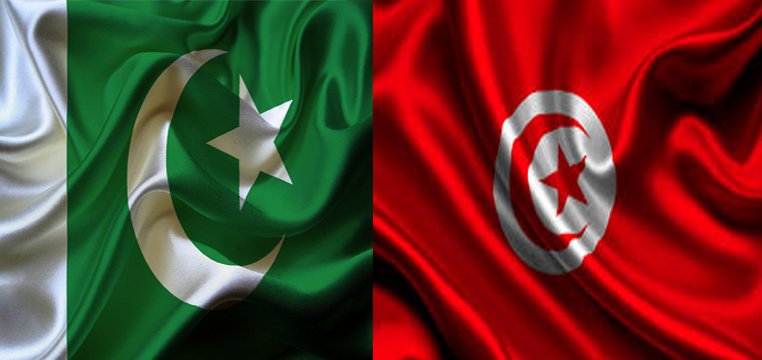
Tunisia and Pakistan are advancing geo-economic ties through recent consultations and an impending PTA, unlocking potentials in agriculture, textiles, and ICT for mutual prosperity and enhanced regional connectivity.
Key Points
- Policy Frameworks: The 4th Bilateral Political Consultations in December 2025 and upcoming PTA signing emphasize agreements to deepen economic cooperation and multilateral coordination.
- Trade Expansion: Bilateral trade reached $13.58 million in 2023-2024, with Pakistan’s exports dominating at $12.38 million, poised for growth via diversified sectors.
- Investment Surge: Tunisia’s olive production initiatives in Pakistan and incentives like 100% foreign ownership highlight high-return opportunities in renewables and agribusiness.
- Sectoral Potentials: Complementary resources—Tunisia’s phosphates and olive oil with Pakistan’s rice and textiles—offer collaborative ventures in value-added processing and tourism.
- Strategic Connectivity: Leveraging Tunisia’s Mediterranean gateway and Pakistan’s CPEC, this alliance fosters Afro-Asian trade routes, mitigating global uncertainties.
In a multipolar world, Tunisia and Pakistan are scripting a compelling geo-economic narrative, blending strategic positions for shared advancement. Policymakers should prioritize this partnership to fortify economic resilience, with Tunisia’s North African hub complementing Pakistan’s South Asian corridors. The 4th Round of Bilateral Political Consultations (BPC) in December 2025 marked a pivotal step, where both nations agreed to enhance coordination at the UN and OIC, while committing to upgrade economic ties on par with robust political relations. This follows announcements of Tunisia’s Trade Minister’s visit to sign a Preferential Trade Agreement (PTA), anticipated to streamline tariffs and boost exchanges. Such frameworks align with Pakistan’s “Engage Africa” policy, opening doors to broader continental integration.
Recent data underscores momentum. Bilateral trade stood at $13.58 million in 2023-2024, with Pakistan exporting $12.38 million primarily in rice, textiles, and chemicals, while importing $1.20 million in phosphates, textiles, and olive oil. Though modest, this represents a foundation for exponential growth, especially post-PTA, as historical trends show fluctuations but upward potential—from $31.76 million in 2021-2022. Investors will appreciate Tunisia’s FDI-friendly environment, allowing 100% foreign ownership in key sectors, coupled with Pakistan’s Special Economic Zones offering tax exemptions. Initiatives like Tunisia’s public-private partnerships for olive cultivation in Pakistan promise high yields, with pilot projects already underway.
|
Bilateral Trade Overview (2023-2024) |
Pakistan to Tunisia |
Tunisia to Pakistan |
|
Total Value (USD Million) |
12.38 |
1.20 |
|
Top Products |
Rice, Textiles, Chemicals |
Phosphates, Textiles, Olive Oil |
|
Historical Peak (2021-2022) |
29.58 |
2.18 |
|
Trade Balance |
+11.18 |
– |
Academics can explore the rational synergies: Tunisia’s export prowess in phosphates (vital for Pakistan’s agriculture) pairs with Pakistan’s textile manufacturing, enabling joint value chains. Geo-economically, Tunisia’s Mediterranean access facilitates links to Europe, while Pakistan’s CPEC provides gateways to Central Asia, creating efficient trade corridors. Potentials extend to ICT, where Tunisia’s digital transformation meets Pakistan’s growing tech sector, and renewables, with both nations targeting sustainable energy. Tourism collaborations could blend Tunisia’s historical sites with Pakistan’s diverse landscapes, fostering cultural exchanges.
Comparative indicators reveal complementary scales. Pakistan’s GDP of $373 billion offers market depth, while Tunisia’s 2.6% projected growth in 2025 signals dynamism amid challenges like debt. Both face unemployment, but cooperative R&D in agribusiness could generate jobs, with Tunisia’s per capita GDP at $4,290 providing insights into efficient resource use.
|
Economic Indicators Comparison (2024-2025) |
Tunisia |
Pakistan |
|
GDP (USD Billion) |
52.9 |
373 |
|
GDP Growth (%) |
1.6 (2024), 2.6 (2025) |
2.5 |
|
GDP per Capita (USD) |
4,290 |
1,581 |
|
Unemployment Rate (%) |
High (challenged) |
6.5 |
|
Public Debt (% of GDP) |
Elevated |
70.07 |
|
Major Exports |
Phosphates, Olive Oil |
Textiles, Rice |
For the general public, this alliance means affordable goods—like Tunisian olive oil enriching Pakistani diets—and job opportunities from cross-border ventures. Environmentally, sustainable agriculture initiatives preserve resources, benefiting communities. Challenges such as Tunisia’s economic pressures can be addressed through joint strategies, turning potentials into realities.
Promoting this bond, policymakers might expedite MOUs on telecommunications and health, as highlighted in independence day commemorations. Investors should eye events like Tunisia’s Halal Expo for networking. Academics could analyze geo-fragmentation buffers via non-aligned ties. This partnership not only elevates bilateral prosperity but inspires equitable Afro-Asian growth.
Conclusion
Tunisia and Pakistan’s geo-economic collaboration, fueled by the 2025 BPC and forthcoming PTA, promises a vibrant future of mutual gains. By capitalizing on agriculture, ICT, and strategic connectivity, both nations can achieve resilient economies, employment boosts, and cultural synergies. Policymakers must drive agreements, investors harness incentives, academics provide analytical depth, and the public embrace enhanced livelihoods. This alliance strengthens regional stability, mitigates challenges, and models cooperative success in a connected world, benefiting millions across continents.
* Dr. Muhammad Jahanzaib holds a PhD in International Relations, is a double gold medalist and author of the book The Interplay of Geo-Politics and Geo-Economics in Pakistan’s Foreign Policy (Post-2008) (Palgrave Macmillan), along with several esteemed publications. As Chief Visionary Officer of Diamanium Thinkers (a global think tank), he brings over 15 years of experience advising ministers, diplomats, security agencies, the corporate sector, and civil society. His advisory work spans economic diplomacy, political economy, economic intelligence, security, society, strategic financial advisory, and the geo-economic world dynamics. He offers a unique blend of practitioner insight and academic rigor, combining hands-on engagement with state institutions and strategic expertise grounded in research. He can be reached at jahanzaibdgc@gmail.com.
Key References
- 4th Round of Bilateral Political Consultations (BPC) between Pakistan and Tunisia – https://mofa.gov.pk/press-releases/4th-round-of-bilateral-political-consultations-bpc-between-pakistan-and-tunisia
- Pakistan, Tunisia Enhance Global Coordination – https://thedailycpec.com/pakistan-tunisia-enhance-global-coordination
- Pakistan, Tunisia Agree to Strengthen Multilateral Coordination – https://thediplomaticinsight.com/pakistan-tunisia-multilateral-coordination
- Tunisian trade minister to visit Pakistan to sign PTA – https://www.nation.com.pk/23-Aug-2024/tunisian-trade-minister-to-visit-pakistan-to-sign-pta
- Press Release – ISSI-PAIDAR Commemorate Tunisia’s Independence Day – https://issi.org.pk/40779-2
- Tunis Trade and Investment – https://mofa.gov.pk/tunis-trade-and-investment
- Tunisia, Pakistan to sign preferential trade agreement soon – https://en.africanmanager.com/tunisia-pakistan-to-sign-preferential-trade-agreement-soon
- 2025 Investment Climate Statements: Tunisia – https://www.state.gov/reports/2025-investment-climate-statements/tunisia
- Tunisia | International Crisis Group – https://www.crisisgroup.org/middle-east-north-africa/north-africa/tunisia
- Pakistan, Tunisia agree to upgrade economic relationship at par with excellent political ties – https://www.app.com.pk/national/pakistan-tunisia-agree-to-upgrade-economic-relationship-at-par-with-excellent-political-ties
- Invest in Tunisia – https://tunisie.pwc.fr/fr/pwc-tunisie/invest-in-tunisia.html
- A guide to start investing in Pakistan – https://invest.gov.pk/sites/default/files/inline-files/Investment%20Guide%20.pdf
- Investment opportunities in Tunisia – https://envoyexcellency.com/investment-opportunities-tunisia
- 2025 Tunisia Investment Climate Statement – https://www.state.gov/wp-content/uploads/2025/09/638719_2025-Tunisia-Investment-Climate-Statement.pdf
- Tunisia, Pakistan mull over bilateral trade & economic cooperation – https://dailyspokesman.net/live/tunisia-pakistan-mull-over-bilateral-trade-economic-cooperation
- Shifting National Security Paradigm of Pakistan from Geo Politics to … – https://www.researchgate.net/publication/352763466_Shifting_National_Security_Paradigm_of_Pakistan_from_Geo_Politics_to_a_Geo_Economics_Era
- Regional Connectivity: The S7+ Framework – https://newlinesinstitute.org/workstream/silk-seven
- Country comparison Pakistan vs Tunisia 2025 – https://countryeconomy.com/countries/compare/pakistan/tunisia
- Pakistan compared to Tunisia – https://www.mylifeelsewhere.com/compare/pakistan/tunisia
- World Bank Forecasts Tunisia’s Growth at 2.6% in 2025 – https://www.ecofinagency.com/news-finances/0910-49409-world-bank-forecasts-tunisia-s-growth-at-2-6-in-2025
- Country comparison Tunisia vs Pakistan 2026 – https://countryeconomy.com/countries/compare/tunisia/pakistan
- Tunis Trade and Investment – https://mofa.gov.pk/tunis-trade-and-investment
- Tunisian trade minister to visit Pakistan to sign PTA – https://www.nation.com.pk/23-Aug-2024/tunisian-trade-minister-to-visit-pakistan-to-sign-pta