
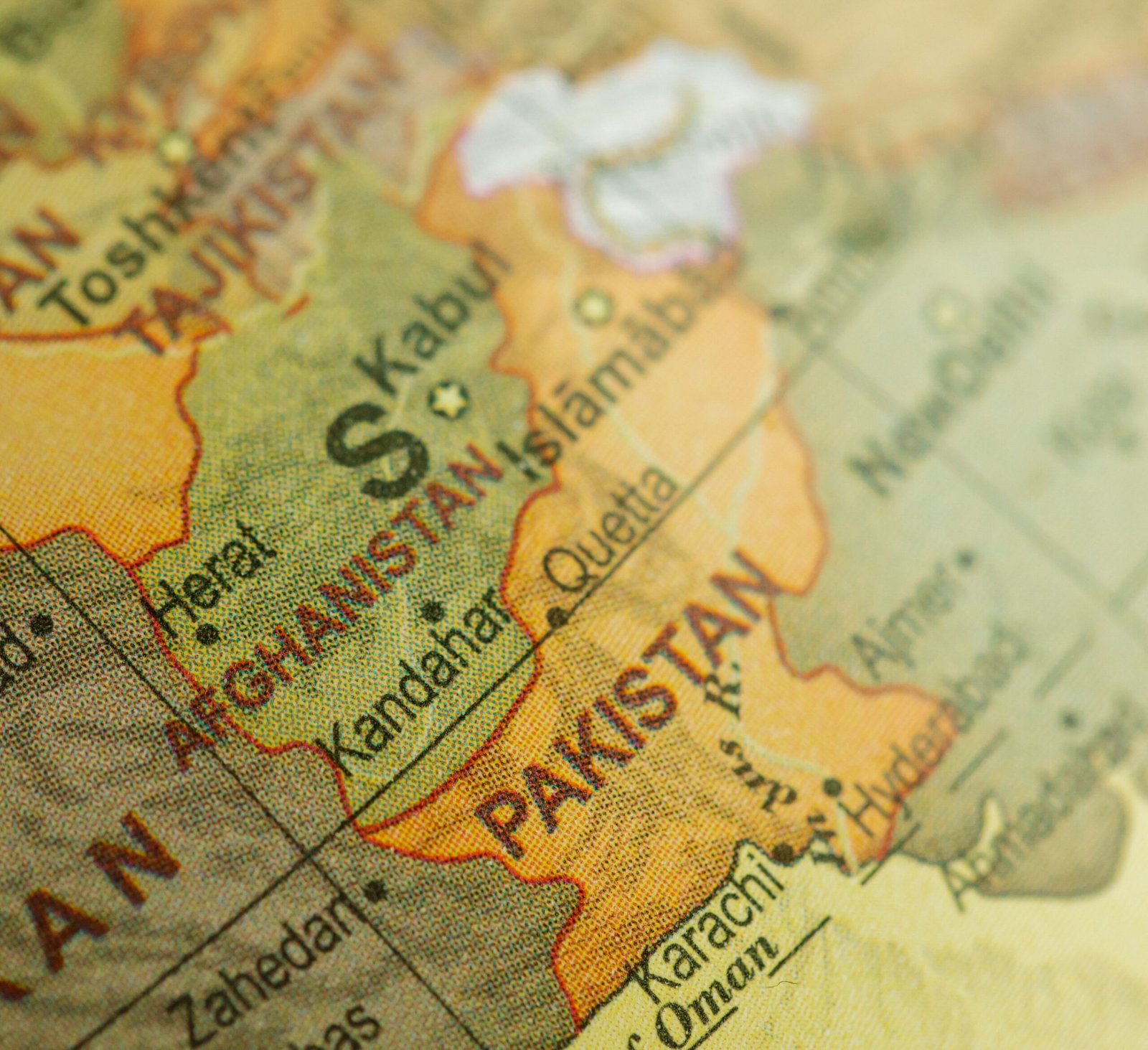
 The Pakistan-Afghanistan corridor is vulnerable to Trade-Based Money Laundering (TBML), and this vulnerability lies in its design. There is weak inspection and data sharing mechanism related to customs and trade, and a porous border. Due to political rivalry, the reform stays stuck. The problem is structural.
Key Points
- Trade-Based Money Laundering (TBML) is carried out through trade instead of bank transfers, by faking the price, quantity and quality of goods.
- The Pakistan-Afghanistan corridor is vulnerable by design: weak customs’ data sharing, weak inspection, allowing TBML to move freely.
- Reforms couldn’t be carried out due to political reasons; both sides profit from informal transfer of goods.
Money laundering is often linked with financial systems, such as shell companies, slush funds, offshore accounts and suspicious transfer of money. But there is a third channel – trade. The FATF describes Trade-Based Money Laundering (TBML) as disguising criminal proceeds by misrepresenting the price, quantity, or quality of goods moving across borders. Customs agencies around the world have limited ability to verify millions of shipments, and countries rarely compare their trade records with one another. As banks get better at catching money laundering, criminals are turning towards trade instead.
Pakistan-Afghanistan Corridor
Afghanistan is a landlocked state. Under the 2010 Afghanistan-Pakistan Transit Trade Agreement (APTTA), Pakistan guarantees Afghanistan the right to move goods, duty-free, through its territory to and from the ports of Karachi, Port Qasim and Gwadar. But the same provisions that make the corridor useful also make it easy to exploit.
The mechanism is simple. Goods enter Pakistan “in transit” to Afghanistan and are exempted from Pakistani duties under Article 30 of APTTA. Some of that cargo never actually leaves Pakistan for Afghanistan. Instead, it gets smuggled back into Pakistani markets and being sold there, untaxed – showing up in the markets of Peshawar or Quetta instead of crossing the border. It is well known that Article 3.2 of APTTA gives either country the right to file a formal complaint if it believes goods intended for transit are being smuggled back and crippling the economy. Both governments know it happens; that is why the treaty builds in a complaint process.
Alongside this, traders also miscalculate the value of goods on purpose. They write down a lower price than the real one to hide how much money is moving, or a higher price to move money out disguised as payment for trade. This works because most of the actual payment for cross-border trade in this region does not go through the banks at all. It moves through hawala or hundi networks instead (an informal system built on trust and personal networks rather than actual paperwork). A study on how drug money moves across this same border by Pakistan’s Anti-Narcotics Force found that this informal settlement makes it “almost impracticable” to enforce Section 67 of the Control of Narcotics Substances Act, which requires banks to report transactions with no clear legitimate source. The same gap applies to trade payments; if the money is not moving through the banks, there is no way for customs to check the invoice against.
The Structural Gaps
- Under the APTTA’s own risk-management framework, only 5% of the containers arriving at the port of entry are subject to physical examination; the rest pass with document checks alone, and no further inspections are done once a container is en-route. There is a reason for this: checking every single container would slow down the trade. But it also means the whole system runs on trusting paperwork that, as explained above, is not always accurate.
- The Durand Line stretches roughly 2,430 km, with a lot of mountains and only a handful of formal crossings like Torkham, Chaman, Ghulam Khan, Kharlachi, and Angoor Adda (there are hundreds of informal ones too that people use every day). Tribal communities living along the border have long-standing rights to move goods and people across it, rights that predate the modern border itself. A UK government-commissioned research review estimates that 50,000 to 60,000 people cross daily, many of them carrying goods along with them, and that formal customs controls capture only a small share of this actual movement.
- Pakistan and Afghanistan do not share a common database for valuing goods. Each country’s customs office works out the value of the same shipment on its own, using its own records, with no shared system to compare the two. This is exactly what makes under-and-over-invoicing so hard to catch; there is nothing that automatically flags it when Afghan customs records a shipment as worth one amount and Pakistani customs records the very same cargo as worth something else.
Why It Hasn’t Been Fixed
Closing these gaps is not just a technical problem, but a political and economic one. Transit trade creates informal income for actors on both sides of the border, from small traders to transport networks. Afghanistan, for its part, has also historically resisted tighter controls, because it sees them as a way for Pakistan to gain leverage over its economy. This resistance is not unreasonable: Afghanistan depends heavily on Pakistani ports, with roughly half of its imports arriving through Karachi, and Pakistan handles most of Afghanistan’s total transit trade. But in the recent data, the Afghan Taliban had already begun shifting trade towards Iran and Central Asia well before the October 2025 border closure, in a deliberate move to reduce this dependence on Pakistan. In FY21, before the Taliban returned to power, the transit trade through Pakistan peaked at nearly 89,000 containers worth about $5 billion. By FY26, that had collapsed to just 11,592 containers worth $367 million.
Even real attempts at reform have run into trouble. In October 2025, Pakistan introduced a new RFID tracking and seal system for transit vehicles, which was a genuine technical improvement. But just weeks later, that border closed because of military clashes between Pakistan and Afghan Taliban forces. Hundreds of vehicles fitted with new tracking devices were left stranded at Torkham and Chaman for weeks. This created exactly the kind of congestion that makes seal tampering and device theft more likely; the very problem the new system was developed to prevent. This shows something important: that new technologies only work if the relationship between the two countries is stable enough to support it. The vulnerability of this corridor cannot be separated from the politics surrounding it.
The formal border crossing has been closed since October 2025, which has stopped official transit trade. Given how many informal crossings exist along the border, some smuggling certainly continues at a reduced rate.
Way Forward
None of this means the corridor cannot be fixed, but any fix must address the actual problem. A shared, real-time customs valuation database, even a small pilot version covering the highest-volume goods, would close the single biggest gap, because mis-invoicing thrives exactly where the two countries cannot compare their records. Expanding physical inspection beyond the current 5% baseline for specific high-risk categories, rather than raising it across all goods, would target the real problem without slowing legitimate trade. Moreover, any future technology upgrade, whether RFID tracking or sealed containers, needs a backup plan for border closures.
The deeper point is this: trade-based laundering along this corridor is not a small flaw that can be simply patched. It grew directly out of how the corridor itself was built. Any serious response needs to treat it that way.
* Tayyaba Naseer is a graduate from Government College University, Lahore. She has completed her BS in International Relations, with the thesis focusing on Pakistan’s shift from geo-strategy to geo-economics. Currently, she is a Research intern at Diamanium Thinkers (A Global Think Tank). She choose to write about the most significant human emotions and the world we live in. She is passionate about unearthing the hidden conspiracies that shape our world and how we are all connected within them.
References