
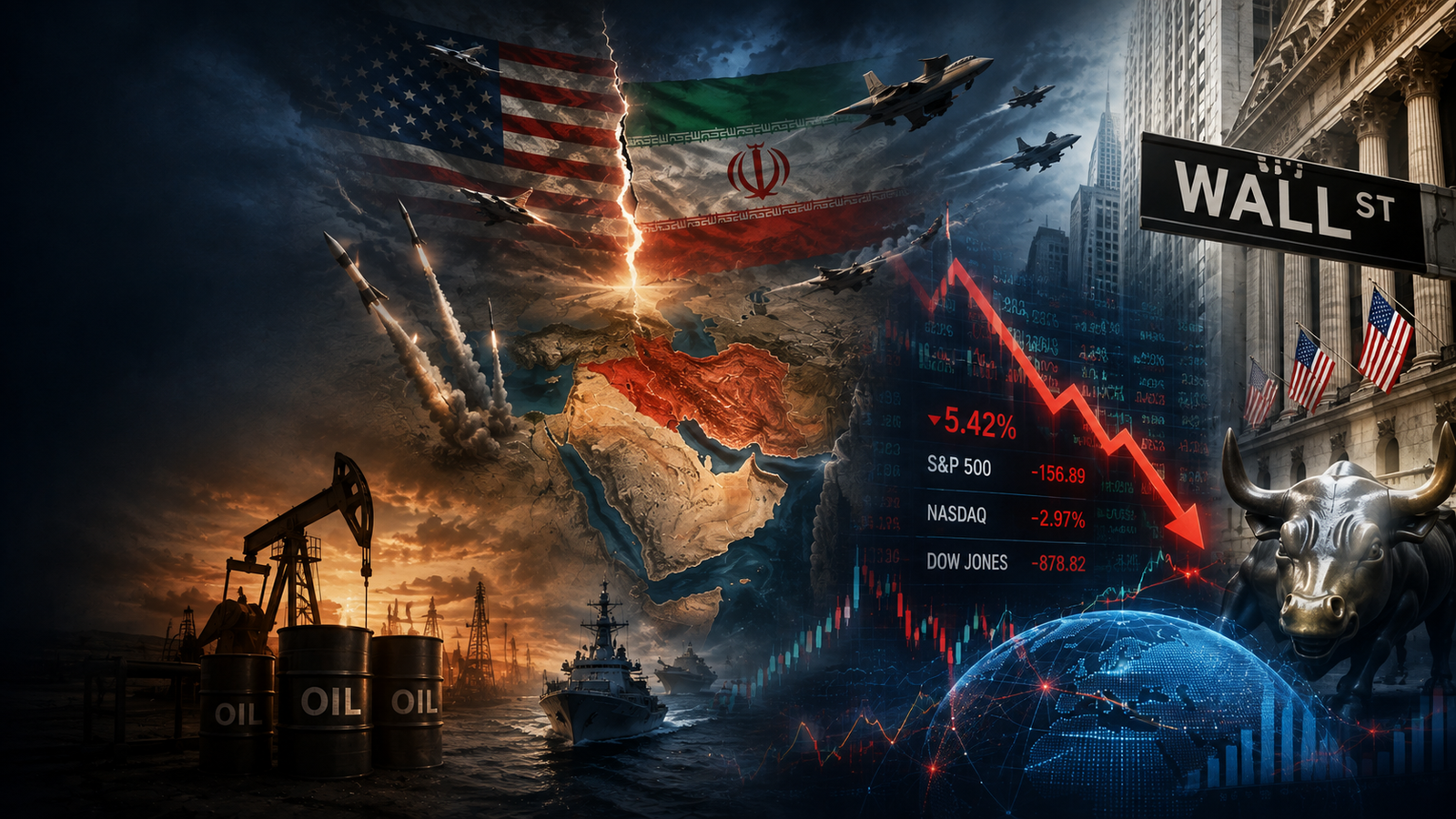
The US-Iran conflict, ongoing since late February 2026, has driven sharp oil spikes, elevated Treasury yields, and episodic volatility on the U.S. equity markets. Initial March drawdowns gave way to recoveries on ceasefire hopes, but July escalations pushed Brent above $100, pressuring equities through inflation and rate fears while energy shares outperformed.
Key Points
- War onset in late February triggered a >7.5% S&P 500 drop amid nearly 70% oil surge and stagflation worries.
- June interim peace deal and Strait of Hormuz reopening fueled record highs and oil retreat toward pre-war levels.
- July ceasefire rupture and consecutive US strikes sent Brent above $100, lifting 10-year yields past 4.7% and weighing on indexes.
- Energy sector gained as a hedge; tech and growth stocks faced headwinds from higher rates and inflation expectations.
- Markets showed resilience overall, with S&P still near all-time highs, but duration of high oil remains the key risk.
The US-Iran war that erupted in late February 2026 has been the dominant geopolitical driver of U.S. Equity Markets performance this year. Disruptions to shipping through the Strait of Hormuz – the conduit for roughly one-fifth of global oil – produced the largest supply interruption in modern energy-market history according to the International Energy Agency. Brent crude rose from about $72 before the conflict to peaks near $120–$126 in April, while WTI reached as high as $113.
Equity markets reacted swiftly. The S&P 500 fell more than 7.5% from its pre-war levels to a late-March closing low near 6,344 as investors priced stagflation risks: higher energy costs reinflating consumer prices while simultaneously eroding real household spending power. The VIX volatility index spiked and bond yields climbed as markets began pricing a more hawkish Federal Reserve.
A fragile de-escalation followed. An interim memorandum of understanding in mid-June, followed by a 60-day ceasefire framework, reopened the Strait and triggered a powerful “peace trade.” Oil prices collapsed back toward $70–$75, inflation expectations eased, and major indexes surged to successive records. By late June the Dow Jones Industrial Average had closed above 52,000 for the first time, the S&P 500 approached 7,500, and the Nasdaq Composite recovered strongly on AI and semiconductor optimism.
That optimism proved temporary. In early July, Iranian attacks on tankers and subsequent US retaliatory strikes led President Trump to declare the ceasefire “over.” Oil jumped more than 5% in a single session; the Dow fell nearly 577 points (1.1%), the S&P 500 slipped 0.3%, and 10-year Treasury yields rose toward 4.57–4.60%. Rate-hike odds for the remainder of 2026 climbed sharply, at one point exceeding 85% for a year-end increase.
Mid-to-late July brought sustained escalation: consecutive nights of US strikes, reports of tanker attacks off Saudi Arabia, and Houthi threats in the Red Sea. Brent briefly exceeded $100 again, WTI climbed above $92, and the 10-year yield broke through 4.70% – its highest since early 2025 – while 30-year yields moved solidly above 5%. The S&P 500 declined roughly 2% from the start of the July strike series and posted consecutive weekly losses for the first time since March. Tech-heavy Nasdaq underperformed as higher discount rates compressed valuations of long-duration growth assets.
By July 24–25 the S&P 500 hovered near 7,412, the Dow near 51,947, and the Nasdaq near 24,976. Energy equities provided a relative safe harbor, while consumer discretionary and industrials faced margin pressure from elevated input and transportation costs. Analysts repeatedly emphasized duration: sustained oil above $85–$90 into year-end would force earnings revisions lower and raise the probability of a broader correction.
As of July 27, a pause in strikes produced a relief rally – oil falling as much as 7.4% toward the mid-$90s, bond yields easing, and equity futures rising – illustrating how quickly markets reprice de-escalation signals. Yet the conflict’s cumulative imprint remains: Brent is still more than 50% higher year-to-date, strategic petroleum buffers have been depleted and inflation data continue to reflect energy pass-through.
Illustrative Market Snapshot (Selected 2026 Levels)
| Indicator | Pre-War (late Feb) | March Low / Peak Impact | June Peace Highs | Late July (approx.) |
|---|---|---|---|---|
| S&P 500 | ~6,900+ | ~6,344 (–7.5%+) | Record highs (~7,500) | ~7,412 |
| Dow Jones | — | Sharp sell-off | >52,000 record | ~51,947 |
| Nasdaq | — | Volatility spike | Strong recovery | ~24,976 |
| Brent Crude | ~72 | ~120–126 peak | ~70–75 | Mid-90s |
| 10-Y Yield | ~3.97% | Rising | Eased | ~4.63% |
Sources compiled from contemporaneous market reports.
Sectorally, energy producers and refiners captured the geopolitical premium, while airlines, logistics, and rate-sensitive technology names absorbed the costs. Broader resilience – equity indexes still trading not far from all-time highs despite the war -reflects the market’s repeated bet that neither Washington nor Tehran ultimately desires a full-scale regional conflagration that would tip the global economy into recession.
Conclusion
The 2026 US-Iran war has imposed a clear but uneven repercussions on the US Equity Markets. Sharp initial drawdowns, powerful recoveries on diplomatic progress and renewed pressure during July escalations demonstrate that equity prices remain highly sensitive to oil trajectories and the inflation-rate feedback loop. Energy equities have served as an effective hedge, yet sustained Brent prices above $90 risk earnings downgrades and higher-for-longer policy rates that would challenge the broader bull market. As of late July, a tentative pause has restored some risk appetite, underscoring the market’s preference for de-escalation. Investors and policymakers must therefore monitor not only strike frequency but the durability of any future ceasefire; prolonged disruption of Middle East supply routes remains the primary threat to U.S. equity markets’ stability and U.S. economic momentum through the remainder of 2026.
* Dr. Muhammad Jahanzaib holds a PhD in International Relations, is a double gold medalist and author of the book The Interplay of Geo-Politics and Geo-Economics in Pakistan’s Foreign Policy (Post-2008) (Palgrave Macmillan, 2026), along with several esteemed publications. As Chief Visionary Officer of Diamanium Thinkers (a global think tank), he brings over 15 years of experience advising ministries, diplomats, security agencies, the corporate sector, and civil society. His advisory work spans economic diplomacy, political economy, economic intelligence, strategic financial advisory, security, society and the geo-economic world dynamics. He offers a unique blend of practitioner insight and academic rigor, combining hands-on engagement with state institutions and strategic expertise grounded in research. He can be reached at jahanzaibdgc@gmail.com.
References
- Swissinfo: Oil Drops, Bonds Rally as US-Iran Tensions Ease
- CNBC: Shortsighted stock market can no longer brush off war
- CNBC: U.S.-Iran war heats up: Stock market and sectors to watch
- The Motley Fool: The Iran War Ceasefire Has Ended and Market Impact
- WSJ: Wall Street’s peace trade collides with renewed Iran fighting
- Boston Herald: Stocks waver while crude oil prices fall
- Tech Times: Dow Sheds 577 Points as Iran Ceasefire Collapses